
Lieutenant Governor’s Massive J&K Administrative Overhaul Stirs Political Storm
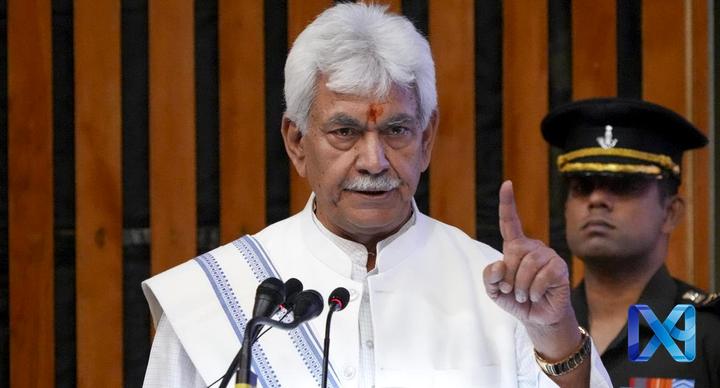
Background of the administrative reshuffle
The Union Territory of Jammu & Kashmir has witnessed an unprecedented re‑allocation of senior bureaucrats by the Lieutenant Governor (L‑G), a move that overturns the traditional deference to the elected state government. The reshuffle, announced in early March, involves the transfer of more than two dozen officers from key departments such as Home, Finance, and Urban Development. The L‑G justified the action as a “visionary step” to streamline governance, but opposition leaders quickly framed it as an erosion of democratic authority.

Advertisement / Click to Enlarge
Political reactions and the chief minister’s response
Chief Minister Omar Abdullah, representing the People’s Democratic Party, publicly praised the transferred officers for their competence while stressing that his administration will now “work with these officers” to deliver public services. His measured tone masks a deeper anxiety: the elected government must now navigate a bureaucracy whose loyalty may lean toward the Centre’s appointee rather than the state’s policy agenda. The statement also signals an attempt to neutralise criticism by portraying cooperation as a sign of responsible governance.
Legal and constitutional context
Under Article 370 (now abrogated) and the Jammu & Kashmir Reorganisation Act, the L‑G holds significant executive powers, especially concerning public order and police matters. However, the routine transfer of officers traditionally falls within the purview of the state’s civil‑service board, a mechanism designed to preserve federal balance. By unilaterally reshuffling senior cadres, the L‑G stretches the constitutional envelope, prompting legal scholars to debate whether such actions infringe on the autonomy granted to a democratically elected government.

Advertisement / Click to Enlarge
Implications for governance and service delivery
From an administrative perspective, the infusion of new officers could inject fresh perspectives into stagnant departments, potentially accelerating development projects stalled by bureaucratic inertia. Yet the abrupt nature of the transfers risks disruption: ongoing schemes may lose momentum, and staff morale could dip as officials grapple with uncertainty about future postings. Moreover, the perception that the L‑G is using personnel changes as a political lever may erode public confidence in the neutrality of the civil service.
Key takeaways
- The reshuffle underscores the delicate power balance between the Centre‑appointed L‑G and the elected state government.
- Legal ambiguities persist regarding the scope of the L‑G’s authority to move senior officers without consultation.
- Short‑term administrative continuity may suffer, even if long‑term strategic alignment improves.
- Political narratives on both sides will shape how citizens interpret the move either as visionary reform or democratic backsliding.
As Jammu & Kashmir navigates this transitional phase, observers will watch closely whether collaborative mechanisms emerge between the L‑G’s office and the state cabinet, or whether the reshuffle fuels a protracted tug‑of‑war over control of the Union Territory’s bureaucracy.