
Crusoe Halts Boom Turbine Rollout, Shifts Energy Strategy for AI Data Centers
Background
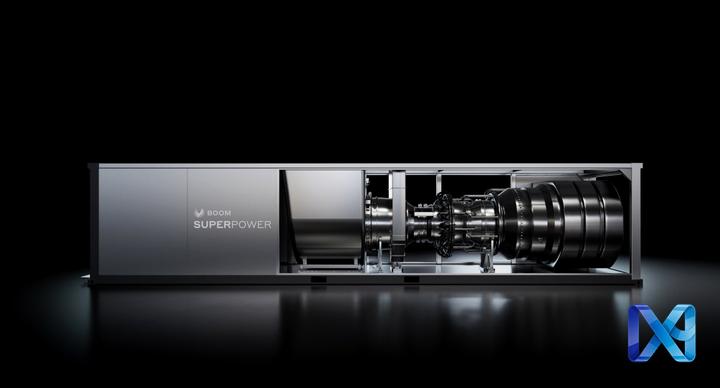
Crusoe Energy Systems, a pioneer in sustainable compute, announced last week that it is pulling the plug on a $1.25 billion partnership with Boom Supersonic to deploy the aerospace company's high‑speed turbine technology at its AI‑focused data centers. The move marks a decisive shift away from a long‑term vision of turning supersonic jet engines into stationary power plants, a concept that generated both excitement and skepticism in the tech‑energy community.

Advertisement / Click to Enlarge
Why Boom Turbines Appealed
Boom Supersonic’s turbines promised an unprecedented power‑density profile: compact, low‑weight, and capable of delivering megawatts of electricity on demand. For data centers that run intensive AI workloads, the prospect of a modular, on‑site power source that could sidestep the constraints of grid reliability and carbon‑intensive fossil fuels was tantalising. Early pilots suggested that a single turbine could support up to 500 servers, potentially slashing operational expenditures.
Technical and Economic Hurdles
Despite the hype, several practical challenges emerged. The turbines were designed for aerospace environments, requiring significant redesign to meet continuous, 24/7 operation in a static setting. Noise, vibration, and cooling requirements proved more demanding than projected, inflating capital costs and extending deployment timelines. Moreover, regulatory approval for stationary jet‑engine installations raised additional compliance burdens.
Crusoe’s Revised Energy Roadmap
In response, Crusoe’s leadership outlined a refreshed roadmap focused on proven renewable technologies solar, wind, and battery storage paired with advanced AI‑driven load‑balancing algorithms. By leveraging these mature solutions, the company aims to achieve carbon‑neutral compute without the engineering risk associated with adapting aerospace hardware for static power generation.
Key Takeaways
- Boom’s turbine concept remains technically impressive but ill‑suited for continuous data‑center operation.
- Crusoe is pivoting to conventional renewables backed by AI‑optimized energy management.
- The decision underscores the broader industry lesson: cutting‑edge tech must align with practical deployment realities.

Advertisement / Click to Enlarge
Industry Implications
Crusoe’s retreat sends a clear signal to other AI‑compute players exploring unconventional power sources. While the allure of “jet‑engine data centers” captured headlines, the market is likely to double‑down on scalable, grid‑compatible renewable solutions. Investors will watch closely as Crusoe re‑allocates capital, potentially accelerating partnerships with solar‑farm operators and battery manufacturers.
Future Outlook
Boom Supersonic, meanwhile, continues to chase its primary mission of building a commercial supersonic airliner. The company has indicated that the stationary‑power initiative will be revisited only when the core aircraft program reaches a stable, revenue‑generating phase. For now, Crusoe’s data‑center customers can expect a steadier, greener power mix without the turbulence of experimental turbine deployments.