
Congress Working Committee Demands CEC Resignation Over Voter Deletion Row – Full Analysis
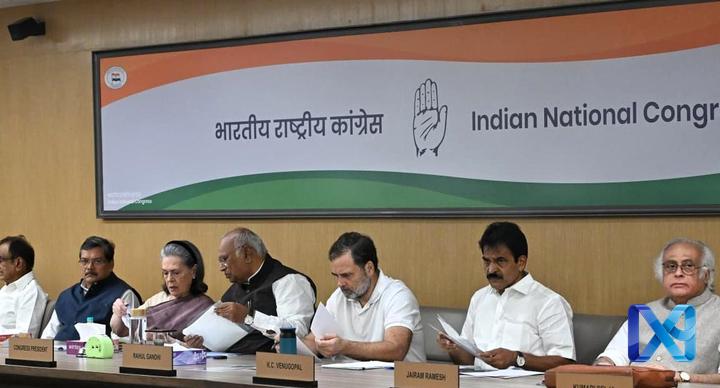
The Congress Working Committee (CWC) has erupted onto the national stage, demanding the resignation of the Chief Election Commissioner (CEC), the suspension of the Secretary‑In‑Charge of the Election Commission (SIR), and the immediate restoration of thousands of deleted voter records. This unprecedented move underscores a deepening crisis of confidence in India's election machinery and signals a potential showdown between the ruling establishment and the opposition.
Historically, the Election Commission of India (ECI) has been lauded as a neutral arbiter, but recent controversies ranging from alleged data mismatches to claims of selective voter list purges have eroded its credibility. The CWC’s latest resolution builds on a series of objections raised since the 2024 general elections, when opposition parties first alleged “vote theft” and procedural irregularities.

Advertisement / Click to Enlarge
In a closed‑door meeting, the CWC formally listed three core demands: (1) the resignation of the CEC, citing loss of impartiality; (2) the suspension of the SIR, accused of overseeing the deletion of legitimate voter entries; and (3) the reinstatement of all removed voters, with an audit to ensure transparency. The resolution also calls for a parliamentary committee to investigate alleged interference by senior government officials in the electoral roll management process.
The demands are not merely symbolic. Deleting eligible voters can shift constituency margins, especially in tightly contested swing seats. Restoring these names could alter vote totals by several hundred thousand nationwide, a figure that, while modest in absolute terms, is politically significant in marginal constituencies.
Key Demands
- Immediate resignation of the Chief Election Commissioner.
- Suspension of the Secretary‑In‑Charge pending a thorough inquiry.
- Reinstatement of all deleted voter records with a public audit trail.
- Formation of an independent parliamentary committee to examine alleged political interference.
Political analysts argue that the CWC’s strategy serves two purposes: applying pressure on the ECI while rallying public sentiment around electoral fairness. By framing the issue as “vote theft,” the opposition seeks to cast the government’s leadership as complicit in undermining democratic norms, even though the resolution deliberately omits specific names to maintain a focus on institutional accountability.

Advertisement / Click to Enlarge
The government’s response has been measured, emphasizing the autonomy of the Election Commission and promising internal reviews. However, insiders suggest that the administration is wary of a full‑scale inquiry that could expose procedural lapses or, worse, trigger judicial scrutiny. The standoff may force the ECI to either concede to some of the CWC’s demands or risk a prolonged legitimacy crisis that could spill over into upcoming state elections.
Takeaways
- Institutional credibility: The row highlights the fragile trust between India’s electoral body and political parties.
- Electoral impact: Restoring deleted voters could materially affect results in key constituencies.
- Political calculus: Both the opposition and the government are leveraging the issue to mobilize their bases ahead of future polls.
- Future oversight: A parliamentary committee, if formed, could set precedents for monitoring election administration.
In sum, the CWC’s resolution is a high‑stakes gambit that could reshape the narrative around India’s democratic processes. Whether the demands lead to concrete reforms or simply become another chapter in the country’s partisan battles remains to be seen, but the episode undeniably places the Election Commission under an unprecedented spotlight.