
Delhi's Seemapuri Building Collapse: Firefighters Rush In, Residents Feared Trapped
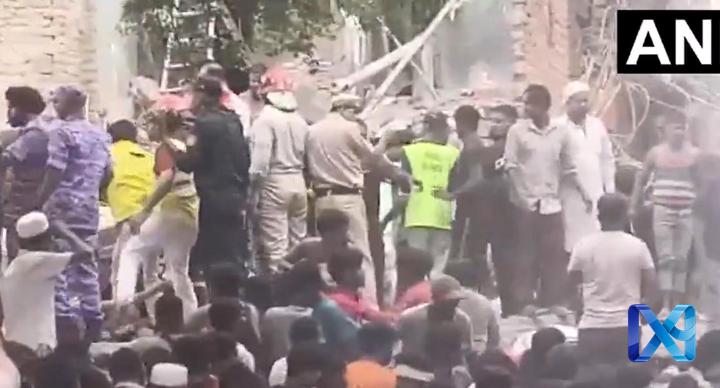
Delhi's Seemapuri Building Collapse: What Went Wrong and How Authorities Responded
On a sweltering afternoon in early October, a multi‑storey residential block in the Seemapuri neighbourhood of Delhi gave way, sending a cascade of concrete and debris onto the streets below. Witnesses described a deafening crash as a portion of the structure collapsed around 3:30 p.m., trapping several families inside the wreckage. The sudden failure has reignited long‑standing concerns about illegal constructions, lax enforcement of building codes, and the strain on urban infrastructure in India’s rapidly expanding capital.
According to a statement from the Delhi Fire Service (DFS), the first emergency call was logged at 3:30 p.m. Fire tenders were dispatched within minutes, and crews arrived to find a chaotic scene: twisted rebar, dust clouds, and frantic residents shouting for help. DFS officers immediately began a search‑and‑rescue operation, employing hydraulic cutters and thermal imaging cameras to locate potential survivors beneath the rubble. Their swift response underscores the department’s growing capability, yet the incident also highlights gaps in preparedness for large‑scale structural failures.

Advertisement / Click to Enlarge
Background: A History of Risk in Delhi’s Informal Settlements
Seemapuri, located on the city’s periphery, is home to thousands of low‑income families living in densely packed housing. Over the past decade, the area has seen a surge in unplanned construction, often driven by inadequate regulation and the pressure to accommodate an influx of migrants seeking work in the capital. Many buildings are erected without proper permits, and illegal alterations such as adding extra floors are common. These practices weaken structural integrity, making them vulnerable to collapse under normal loads, let alone during extreme weather events.
Compounding the problem is the limited capacity of municipal bodies to conduct regular inspections. While Delhi’s Building Bye‑Laws were tightened after the 2013 collapse of the Jalandhar House, enforcement remains uneven. Corruption, insufficient staffing, and bureaucratic delays mean that unsafe structures often continue to house families for years before any action is taken. The Seemapuri tragedy is a stark reminder that policy gaps translate directly into human peril.

Advertisement / Click to Enlarge
Emergency Response: What the DFS Did and What Remains Challenging
The DFS officer on scene reported that “some people might be trapped in the debris,” prompting the deployment of two fire tenders equipped with cutting tools and a team of trained rescuers. Within the first hour, the crews had cleared a path to a partially exposed apartment, allowing them to extract a family of three unharmed. However, the ongoing risk of secondary collapse forced rescuers to work cautiously, slowing progress and leaving many victims unaccounted for.
- Rapid mobilization of fire tenders within minutes of the call.
- Use of thermal imaging to detect body heat beneath rubble.
- Coordination with local police and medical teams for triage.
Despite these efforts, the incident exposed critical challenges: limited heavy‑machinery for large‑scale debris removal, inadequate real‑time communication between agencies, and a shortage of trained urban search‑and‑rescue (USAR) specialists. Experts argue that investing in specialized USAR units and establishing a centralized command center could dramatically improve outcomes in future incidents.
Key Takeaways and Policy Recommendations
1. Enforce Building Codes Rigorously: Regular audits, transparent permit processes, and strict penalties for illegal construction are essential to prevent similar disasters.
2. Strengthen Emergency Infrastructure: Expand DFS capabilities with additional USAR teams, heavier equipment, and better inter‑agency coordination protocols.
3. Community Awareness: Conduct outreach programs in high‑risk neighborhoods to educate residents on structural safety and emergency response procedures.
4. Data‑Driven Monitoring: Implement GIS‑based mapping of vulnerable structures to prioritize inspections and allocate resources efficiently.
The Seemapuri collapse is not an isolated incident but part of a broader pattern of urban risk in megacities worldwide. Addressing the root causes illegal construction, enforcement laxity, and emergency preparedness will require concerted effort from government agencies, civil society, and the communities themselves. Only through a multi‑pronged approach can Delhi hope to safeguard its citizens from the devastating consequences of structural failures.