
Google Fitbit Air Review: Is the New Wearable Worth It?
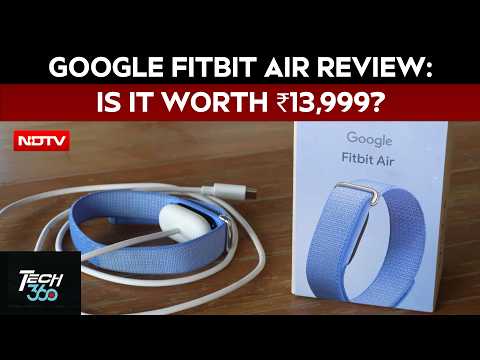
Click to Enlarge Image
Introduction
The tech world has been abuzz since Google announced the Fitbit Air, its first wearable under the Google brand after the Fitbit acquisition. Positioned as a premium fitness companion, the device promises a blend of Google’s AI driven services with Fitbit’s renowned health tracking pedigree. In a market saturated with smartwatches from Apple, Samsung, and Garmin, the Fitbit Air aims to carve out a niche by offering deep integration with Google Assistant, Wear OS, and a sleek design that feels both familiar and futuristic. This review dissects the smartwatch’s hardware, software, and overall value proposition.

Advertisement / Click to Enlarge
Design and Build Quality
The Fitbit Air features a 1.2‑inch AMOLED display protected by Corning Gorilla Glass 5, delivering vivid colors and excellent outdoor readability. The case comes in two finishes: a brushed aluminum body for a premium feel and a lightweight alloy version targeting active users. The strap system is interchangeable, supporting silicone, leather, and metal bands, making personalization effortless. Ergonomically, the device sits comfortably on the wrist, with a curvature that mirrors the natural line of the forearm, reducing fatigue during long workouts.
Durability
With an IP68 rating, the Fitbit Air is water‑resistant up to 50 meters, allowing swimmers to track laps without hesitation. The build feels sturdy yet not bulky, a balance that many competitors struggle to achieve.

Advertisement / Click to Enlarge
Health and Fitness Tracking Features
Fitbit’s legacy shines through with a comprehensive suite of sensors: an optical heart‑rate monitor, SpO2 sensor, skin temperature sensor, and a new electrodermal activity sensor for stress detection. The device automatically logs steps, distance, calories, and offers over 30 workout modes ranging from HIIT to yoga. Advanced sleep staging breaks down deep, light, and REM cycles, while the new “Daily Readiness Score” leverages AI to suggest optimal training intensity based on recovery metrics.
Performance and Software Experience
Running on Wear OS 4, the Fitbit Air offers seamless access to Google services such as Maps, Calendar, and Gmail, alongside Fitbit’s own health app ecosystem. The UI is clean, with quick‑access tiles for heart‑rate, notifications, and music control. App launch times are snappy, thanks to a Snapdragon Wear 4100+ chipset, and the device supports LTE on select models, freeing users from a tethered phone experience. However, the app store feels limited compared to rivals, with fewer third‑party options.
Battery Life and Connectivity
Google claims up to 7 days of battery life on a single charge, a realistic figure for typical mixed‑usage scenarios. Heavy GPS usage or LTE can reduce endurance to around 3‑4 days, still acceptable for most users. The charger utilizes a magnetic dock, similar to other modern wearables, and reaches 80% capacity in roughly 45 minutes. Connectivity options include Bluetooth 5.2, Wi‑Fi, and NFC for contactless payments, covering all essential bases.
Value Assessment and Market Position
When placed side‑by‑side with the Apple Watch Series 9 and Samsung Galaxy Watch 6, the Fitbit Air holds its ground on health metrics and design elegance but lags in app diversity and smartwatch‑specific features like ECG. Its pricing aligns with high‑end offerings, yet the integration of Google services may appeal to Android‑first users seeking a unified ecosystem. For fitness enthusiasts who prioritize accurate health data and a minimalist UI, the Fitbit Air presents a compelling case.
Conclusion and Key Takeaways
The Google Fitbit Air merges the best of Fitbit’s health expertise with Google’s AI and software ecosystem, delivering a polished wearable that feels at home on any wrist. While it doesn’t reinvent the smartwatch category, its robust sensor array, elegant design, and solid battery life make it a worthy contender for those invested in Google’s ecosystem and serious about health tracking.